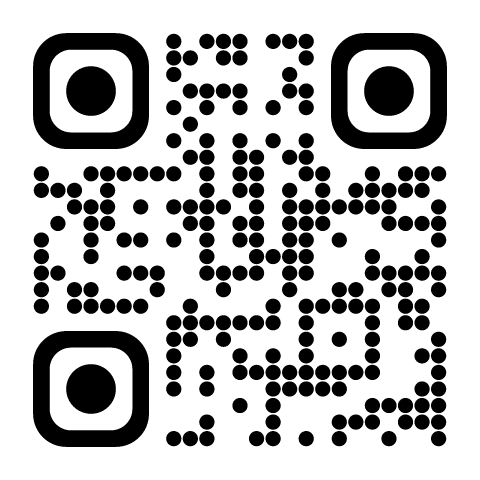
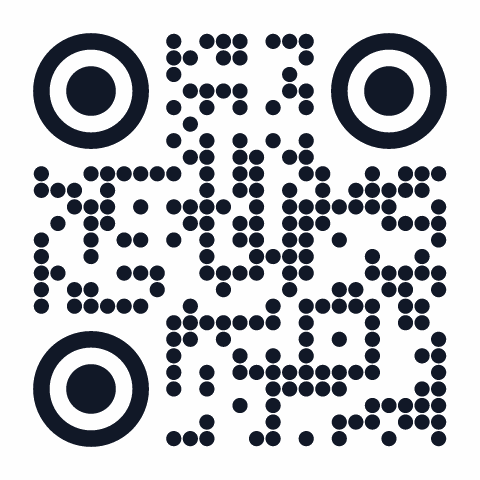
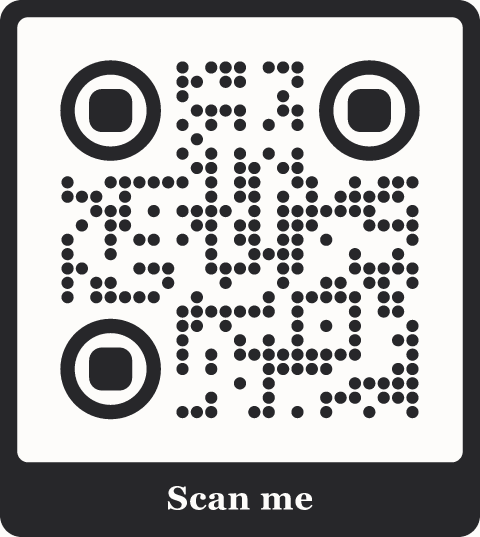
A minimalist code is mostly about what you take away: colour, frames, outer shapes, and some of the ink. This template shrinks each dot to 78 percent of its cell, which is as far as the blur test allows, keeps the eyes as plain squares, and widens the quiet zone to four modules so the code floats. Charcoal instead of black softens it one more notch.
It suits architecture studios, galleries, fashion lookbooks, premium packaging and any layout with a lot of white space. Because the dots are small, print it a little larger than you would a plain code: 3 cm rather than 2 for a hand-held scan. The scan check includes a small-print test for exactly this reason.
Questions
Can I make the dots even smaller?
The Look tab stops at the point where the blur test starts failing. Smaller dots look lighter but a phone camera at arm’s length sees a grey smudge.
Does the wide margin matter?
The quiet zone helps the decoder find the code; four modules is generous and also part of the look. Keep whatever is printed next to the code outside that band.